Showing posts with label Info. Show all posts

Monday, September 26, 2011

[+]d'ZheNwaY's Blog[+]: How Bug Bounties Are Like Rat Farming

id='post-body-893385384109287628'>
SAN FRANCISCO--It's become fashionable of late to have people from outside the industry give keynotes at security conferences as a way of providing a fresh perspective or unique insight into what security means. Often, that fresh perspective turns out to be some variation of the "I don't know security, so let me tell you how it doesn't relate to my field" speech. Stephen Dubner fixed that.


The co-author of the ridiculously popular Freakonomics books, Dubner is a former New York Times writer and would seem an incongruous choice to kick off the talks at a security conference. But it turns out that he knows more about security than one would think. Maybe even more than he might think. His books are filled with stories meant to show the uninitiated how deeply economics and its offshoots affect our daily lives.


Much the same could be said of security and its numerous sub-disciplines. As recently as three or four years ago, many normal Internt users probably didn't give much thought, if any, to the security of their PCs. If they did think about it, they likely thought in terms of annoying viruses and worms, or maybe identity theft. But the events of the last few years have shown that no one can afford to ignore the reality of the security situation.


In his keynote speech at the United Security Summit here, Dubner said that he had great respect for the job that security professionals do, fighting the good fight against attackers and the occasional nation-state. But his most insightful comments had to do with rat farming.


What is rat farming, you ask. It turns out it's essentially a slightly more disgusting version of bug hunting. Dubner said that he was in Johannesburg, South Africa, recently, and the city was having a serious problem with rats. Officials had tried a number of remedies with no real success, and so they eventually hit upon the idea of offering a small monetary reward for every dead rat turned in. The program was a huge hit, and dead rats started flowing in.


But the idea actually created an entirely new industry: rat farming. Once people discovered that there was money to be made by turning in dead rats, they started breeding the vermin strictly for the purpose of killing them and collecting the cash. Effective, but gross.


But it has a clear analog in the bug-bounty programs that software companies such as Mozilla, Google, Barracuda and others have established in recent years. Those programs offer researchers various cash rewards for reporting vulnerabilities to the companies, and they've been quite successful in drawing submissions from a wide range of people.


But are those bugs being bred in the lab by researchers just to be led to the slaughter for a nice payday? Yes, yes they are. And that's a good thing.


nb : threatpost

Source: http://dzhenway.blogspot.com/2011/09/how-bug-bounties-are-like-rat-farming.html

»»  read more

[+]d'ZheNwaY's Blog[+]: NetworkMiner v1.1 Released – Windows ...

id='post-body-7419912513689609071'>


NetworkMiner logo

NetworkMiner


NetworkMiner is a Network Forensic Analysis Tool (NFAT) for Windows. NetworkMiner can be used as a passive network sniffer/packet capturing tool in order to detect operating systems, sessions, hostnames, open ports etc.


without putting any traffic on the network. NetworkMiner can also parse PCAP files for off-line analysis and to regenerate/reassemble transmitted files and certificates from PCAP files.
NetworkMiner collects data (such as forensic evidence) about hosts on the network rather than to collect data regarding the traffic on the network. The main user interface view is host centric (information grouped per host) rather than packet centric (information showed as a list of packets/frames).


NetworkMiner has, since the first release in 2007, become popular tool among incident response teams as well as law enforcement. NetworkMiner is today used by companies and organizations all over the world.


NetworkMiner (free edition)NetworkMiner Professional
Live sniffing Yes Yes
Parse PCAP files Yes Yes
Receive Pcap-over-IP Yes
OS Fingerprinting (*) Yes Yes
Port Independent
Protocol Identification (PIPI)
Yes
Export results to CSV / Excel Yes
Configurable file output directory Yes
Geo IP localization (**) Yes
Host coloring support Yes
Command line scripting support Yes (through NetworkMinerCLI)
PCAP parsing speed (***)0.581 MB/s0.457 MB/s (GUI version)
0.735 MB/s (command line version)
PriceFree€ 500 EUR
Download NetworkMiner (free edition) Buy NetworkMiner Professional


* Fingerprinting of Operating Systems (OS) is performed by using databases from Satori and p0f
** This product includes GeoLite data created by MaxMind, available from http://maxmind.com/
*** Measured by loading dump.eth0.1059726000 from Defcon 11 (189MB) on a PC with Intel Core 2 Duo (2,66GHz) and 2GB RAM

NetworkMiner can extract files and certificates transferred over the network by parsing a PCAP file or by sniffing traffic directly from the network. This functionality can be used to extract and save media files (such as audio or video files) which are streamed across a network from websites such as YouTube. Supported protocols for file extraction are FTP, TFTP, HTTP and SMB.


NetworkMiner Professional extracted files


NetworkMiner Professional showing files extracted from sniffed network traffic to disk


NetworkMiner Professional extracted images and pictures


NetworkMiner Professional showing thumnails for images extracted to disk


User credentials (usernames and passwords) for supported protocols are extracted by NetworkMiner and displayed under the "Credentials" tab. The credentials tab sometimes also show information that can be used to identify a particular person, such as user accounts for popular online services like Gmail or Facebook.


NetworkMiner Professional USB flash drive Another very useful feature is that the user can search sniffed or stored data for keywords.


NetworkMiner allows the user to insert arbitrary string or byte-patterns that shall be searched for with the keyword search functionality.


NetworkMiner Professional comes installed on a specially designed USB flash drive. You can run NetworkMiner directly from the USB flash drive since NetworkMiner is a portable application that doesn't require any istallation. We at Netresec do, however, recommend that you copy NetworkMiner to the local hard drive of your computer in order to achieve maximum performance.


» Buy NetworkMiner Professional «


More Information


For more information about NetworkMiner, please see the NetworkMiner Wiki page on SourceForge.
There are also several blog posts about NetworkMiner on the NETRESEC Network Security Blog:


You can download NetworkMiner v1.1 here:


NetworkMiner_1-1.zip


nb : netresec


Source: http://dzhenway.blogspot.com/2011/09/networkminer-v11-released-windows.html

»»  read more

[+]d'ZheNwaY's Blog[+]: Nation-State Attackers Are Adobe's Biggest ...

id='post-body-2932190775506502860'>


Adobe SAN FRANCISCO--It's no secret that attackers have made Adobe's products key targets for the last couple of years, routinely going after bugs in Reader, Flash and Acrobat in targeted attacks and widespread campaigns alike. But it's not just the rank-and-file bad guys who are making Adobe a priority; it's more often nation-states, the company's top security official said.


Adobe, like many other large software companies, has contacts in the big defense contractors, government agencies and other organizations that are most often the targets of state-sponsored attacks. So when a new attack begins, the company typically hears about it within hours as customers begin to call and report a new threat involving an Adobe product. Since the company began its software security program several years ago, the sophistication level of the people finding and exploiting new bugs in Flash or Reader has gone up significantly.


Now, says Brad Arkin, the senior director of product security and privacy at Adobe, it's at a point where the company's main adversaries are state-sponsored actors.


"In the last eighteen months, the only zero days found in our software have been found by what Dave Aitel would call carrier-class adversaries," Arkin said in his keynote speech at the United Security Summit here Tuesday. "These are the groups that have enough money to build an aircraft carrier. Those are our adversaries."


Arkin said that when a new attack involving a zero-day bug in one of Adobe's products starts, it typically will begin with attacks against a select group of high-profile organizations. That usually means defense contractors, government agencies or large financial services companies. Once the security teams at those organizations find and analyze the threat, Arkin said his team will begin getting a flurry of calls within an hour or two as the campaign hits.


From there, the attack will often then move down the ladder to other large enterprises and then smaller ones as the new exploit shows up in crimeware packs and automated attack tools. By that time, it's likely an entirely different set of attackers using the exploit. But it's the well-funder and highly skilled attackers who are doing the real heavy lifting in terms of finding new bugs and designing methods to exploit them.


"These samples trickle downhill really quickly and show up in crime packs," Arkin said. "The actual exploits it turns out are very, very expensive and difficult to build. Finding the flaw is a lot easier than writing the exploit. If you want to defend against the carrier-class adversary, it's a very different cost."


Perhaps the most famous example of this kind of targeted attack is the one that hit RSA Security earlier this year. In that case, the company was compromised through the use of a phishing email that contained an Excel file with a malicious SWF file embedded inside it. An employee opened the email and then the attachment and the attack was off and running from there. Arkin said that while his team didn't get a sample of the malicious file from RSA, it did see others from organizations that likely were targeted by the same campaign.


"We have lots of friends in the places where people get attacked a lot and I don't think that RSA was the only target in that campaign," he said.


nb : threatpost

Source: http://dzhenway.blogspot.com/2011/09/nation-state-attackers-are-adobes.html

»»  read more

[+]d'ZheNwaY's Blog[+]: McAfee Delivers Comprehensive Protection ...

id='post-body-6378720536249347675'>
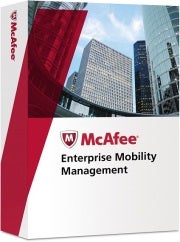
Just when you were starting to get ahead of the curve when it comes to locking down the network and protecting PCs, everything went mobile. Not just laptops--but tablets, and smartphones that run unique operating systems and applications on completely different hardware. To help you combat the dramatic rise in mobile security threats, McAfee has developed Enterprise Mobility Management.


Smartphones and tablets have enjoyed some degree of security by obscurity. Although it has always been theoretically possible to hack or compromise mobile devices one way or another, the incentive wasn't there. But, with smartphones and tablets storing 32GB, 64GB or more of data, and providing access to sensitive resources, malware developers are paying more attention.


McAfee EMM takes a three-pronged approach to protecting mobile devices and data.The nascent nature of mobile device hardware and software, though, make it new territory for you to wrestle with and try to protect. As if that isn't enough, the very point of mobile devices is to be mobile--so there is no pretense of a "perimeter" to hide inside. These devices are out there roaming about, and you need tools to protect the information they contain.


Another challenge you face is the sheer diversity of platforms. Businesses typically have some degree of standardization when it comes to PC hardware, operating system, Web browser, and installed software. But, with mobile devices you might be dealing with iOS, Android, BlackBerry, Windows Phone, and more--plus the diversity of hardware and apps that come with each mobile platform.


McAfee Enterprise Mobility Management"Mobile device adoption is exploding, and unfortunately, so are the threats targeting mobile platforms. If McAfee’s historical experience analyzing threats on numerous platforms is any indication, we believe that the emerging mobile malware we are seeing today is just the beginning," said John Dasher, senior director, mobile security for McAfee. "It’s a whole new world, and a challenge for IT to craft security policies that make sense while updating their infrastructure. At McAfee, we’re working hard to create new technology to help enterprises address the challenge of securely incorporating these new mobile platforms into their environment."


McAfee Enterprise Mobility Management (EMM) uses a three-pronged approach to mobile security--protecting the device itself, the data it contains, and the apps that run on it. The device protection brings the familiar controls and security measures from McAfee desktop security solutions and applies it to mobile devices. The device protection also includes VirusScan Mobile to guard against malware, and McAfee Site Advisor to protect mobile devices from malicious websites and phishing attacks.


McAfee EMM has data leak prevention controls. McAfee claims that data remains protected even on jailbroken or rooted devices. The data protection measures also include remote backup, lock, and wipe functionality to protect data if the device is lost or stolen, and McAfee is working on additional controls to separate business data from personal data.


The apps that run on these mobile devices can be a security threat in and of itself. Some platforms are more susceptible than others to rogue, malicious apps. The McAfee EMM app protection includes McAfee App Alert which lets users know how they apps are accessing or using personal data. McAfee is also expanding the Global Threat Intelligence network to include mobile app reputation services to help identify potentially malicious apps.


Mobile threats will continue to escalate and proliferate, so the sooner you get a security framework in place to protect your mobile devices and the data they contain, the better. Visit McAfee Mobile Security Solutions for more details on Enterprise Mobility Management.


nb : pcworld

Source: http://dzhenway.blogspot.com/2011/09/mcafee-delivers-comprehensive.html

»»  read more

[+]d'ZheNwaY's Blog[+]: Microsoft dumps partner over telephone ...

id='post-body-2431855549272850708'>


One of Microsoft's Gold Partners has had its relationship with the software giant unceremoniously terminated, after being revealed to be orchestrating a telephone support scam.


Comantra, based in India, are said to have cold-called computer users in the UK, Australia, Canada and elsewhere, claiming to offer assistance in cleaning up virus infections.
The bogus support calls came from Comantra employees who claimed to be representing Microsoft, and used scare tactics to talk users into opening the Event Viewer on Windows, where a seemingly dangerous list of errors would be seen.


Once terrified by what appears to be a worrying collection of warning messages, and believing this was evidence of a malware infection, users would be tricked into allowing Comantra technicians to gain remote access to their computer, and hand over their credit card details to fix any "problems".
In the past, vulnerable elderly people have even been told by scammers that heavy rain may have caused a computer virus infection.


What makes the scam particularly audacious is that during the scam campaign, Comantra were a certified Gold partner of Microsoft, and when quizzed by skeptical computer owners would use their status to trick potential victims into believing the call was legitimate.
Comantra website
A search for "Comantra" on the internet finds a large number of posts and complaints about the scam telephone calls, stretching back over 18 months. Some users have even asked on Microsoft's own message forums how it is possible for the firm to have "Gold Partner" status.


As PC Pro reports, a Microsoft spokesperson has now confirmed that Comantra has at long last been struck off their Gold Partner list:


"We were made aware of a matter involving one of the members of the Microsoft Partner Network acting in a manner that caused us to raise concerns about this member's business practices. Following an investigation, the allegations were confirmed and we took action to terminate our relationship with the partner in question and revoke their Gold status."
"There are no circumstances under which we would ever allow partners or any other organisations to pose as Microsoft. We view matters such as these extremely seriously and take immediate action if such behaviour is brought to our attention and found to be the case."


Hmm.. Maybe someone should tell Comantra to update their website and remove that Gold Partner logo?


Comantra website with Gold Partner logo
Listen to this great podcast by Sophos experts Paul Ducklin and Sean Richmond where they discuss the problem of fake tech support calls, and the ways in which you can avoid falling for scams like this yourself:


(Duration 6:15 minutes, size 4.5MBytes)


Also, make sure that your family and friends are on their guard against suspicious tech support calls telling them about infections on their computer - even if the callers do claim to be from Microsoft. It only takes a lapse of common sense for you to hand your credit card details straight down the line to a criminal.


nb : nakedsecurity.sophos


Source: http://dzhenway.blogspot.com/2011/09/microsoft-dumps-partner-over-telephone.html

»»  read more

[+]d'ZheNwaY's Blog[+]: Malicious spam campaigns proliferating

id='post-body-6791725755399361126'>


Summary: In a recent blog post, researchers from Commtouch have summarized their observation status, and pointed out that someone is actively building crimeware-friendly botnets.


With spam continuing to represent the distribution vector of choice for the majority of cybercriminals, it shouldn’t be surprising that the volume of malicious spam campaigns is proliferating.


In a recent blog post, researchers from Commtouch have summarized their observation status on the malicious spam campaigns from last month, namely, UPS/FedEx, Map of love and Hotel charge error and pointed out that someone is actively building crimeware-friendly botnets:


“Pre-outbreak levels varied between a few hundred million emails to around 2 billion per day.  The peak outbreak included distribution of nearly 25 billion emails with attached malware in one day.”


Malware campaigns have cyclical pattern of distribution, namely, cybercriminals constantly rotate and introduce new topics, once the lifecycle of the previous campaign have reached the maturity stage. Meanwhile, users continue interacting with spam emails, clicking on links, downloading attachments and unsubscribing themselves, prompting the success of spam in general.


Now, that the cybercriminals have set up the foundations for their botnet aggregation practices by spamvertising billions of emails, it’s worth keeping an eye on the actual response rate of the command and control servers used in the campaigns in order to roughly estimate the damage caused by the campaigns.


nb : zdnet


Source: http://dzhenway.blogspot.com/2011/09/malicious-spam-campaigns-proliferating.html

»»  read more

[+]d'ZheNwaY's Blog[+]: Massachusetts Attorney General, Victim of ...

id='post-body-3426297939823368000'>
Massachusetts Attorney General Martha Coakley said on Tuesday that her office would be inquiring into long-standing complaints about fraudulent purchases that leverage Apple's popular online music store.


In a lunchtime address to business and technology leaders in Massachusetts, Coakley said she was a victim of identity theft in recent months, and that her stolen credit card information was used to make fraudulent iTunes purchases. When asked (by Threatpost) about whether such fraud constitutes a reportable event under the Bay State's strict data breach notification law, Coakley said that her office would be looking into that question and demanding answers from Cupertino, California based Apple, which has steadfastly refused to comment, or report the breaches to Massachusetts regulators.


Coakley was speaking before an audience of technology and business leaders at an inaugural lunch for Massachusetts' Advanced Cyber Security Center (ACSC). Coakley said that her investment in protecting consumers from identity theft was personal, acknowledging that her bank account was emptied after cyber criminals stole her debit card information during a ski trip to New Hampshire. It was not the first time Coakley had mentioned the incident in public. After skimming the card info, Coakley said the thieves attempted to use it to purchase a laptop from Dell Computer, which detected the fraudulent transaction and contacted Coakley. Not so Apple, whose iTunes media store was used to make a slew of transactions that emptied the Attorney General's account.


Informed of the well documented pattern of fraud through iTunes, in which stolen credit cards or bogus iTunes gift cards are matched with compromised iTunes accounts and used to purchase merchandise, Coakley said she wasn't aware of the larger pattern, but that it could be a reportable offense under the State's data privacy law. She promised her office would be contacting Apple for more information that very afternoon - a statement that received hearty applause from the audience.


Despite the tough tone, Coakley's speech was tailored more to a business audience wary of burdensome enforcement of State data privacy laws, including the State's data breach notification law and 201 CMR 17, the Massachusetts Data Protection Law. That law took effect in March, 2010 but the first fine under the law was issued in March of 2011 to Briar Group, a Boston-area restaurant chain that showed gross negligence in securing its networks and handling customers' credit card numbers.


Coakley said that companies that attempt, in good faith, to adhere to the State's privacy laws have little to fear in the way of fines or prosecution. However, organizations that flaunt the law or ignore the need for data security should count themselves warned.


Describing her office as the first line of defense for consumers, Coakley said her office was pursuing a "common sense" approach to enforcement and notification. Large breaches, such as the hack of Massachusetts retailer TJX, warrant an all out effort to notify the public. In the case of smaller breaches, Coakley said her office wanted to work with victim organizations to make sure that holes in their defenses and IT security practice are addressed.


The Attorney General said her office has received around 480 data breach notifications so far in 2011, and 1,166 since the law took effect in March, 2010 - suggesting that the incidence of data breaches is holding steady, despite a tough economy. The vast majority of those breaches are small in nature. Eighty two percent of disclosed breaches affected fewer than 100 people, and just 4% affected between 1,000 and 10,000 people. Similarly, hacking incidents only made up a quarter of the reported breaches, with another quarter due to inadvertent human error, Coakley said.


The State's breach notification law, dubbed 201 CMR 17, sets clear guidelines for the types of incidents that constitute reportable breaches. Any incident resulting in "the unauthorized acquisition or unauthorized use of unencrypted data or, encrypted electronic data" that creates a "substantial risk of identity theft or fraud against a resident of the commonwealth" need to be disclosed, as well as combinations of personal information, such as a name and credit card number, must be reported. That would seem to describe the use of Coakley's credit card information on iTunes. However, its is unclear whether Apple actually holds the data used to process the transaction on iTunes, or whether the purchases are merely "pass through" transactions about which Apple has no knowledge or visibility, according to a source within the Attorney General's Office.


nb : threatpost

Source: http://dzhenway.blogspot.com/2011/09/massachusetts-attorney-general-victim.html

»»  read more

[+]d'ZheNwaY's Blog[+]: Adobe adding security, privacy goodies to ...

id='post-body-1554957581769519252'>


Summary: Adobe’s new Flash Player 11 will include support for 64-bit exploit migitation and support for SSL socket connections.


Battling to cope with the hacker bullseye on its back, Adobe plans to add new security and privacy features to the next iteration of its ubiquitous Flash Player, including  support for SSL socket connections and the introduction of 64-bit ASLR (Address Space Layout Randomization).


Adobe said the new Flash Player 11, expected in early October, will include the SSL socket connection support to make it easier for developers to protect the data they stream over the Flash Player raw socket connections.


Adobe to rush out Flash Player patch to thwart zero-day attacks ]


Flash Player 11 will also include a secure random number generator.


Adobe’s Platform Security Strategist Peleus Uhley explains:


Flash Player previously provided a basic, random number generator through Math.random. This was good enough for games and other lighter-weight use cases, but it didn’t meet the complete cryptographic standards for random number generation. The new random number generator API hooks the cryptographic provider of the host device, such as the CryptGenRandom function in Microsoft CAPI on Windows, for generating the random number. The native OS cryptographic providers have better sources of entropy and have been peer reviewed by industry experts.


Adobe admits to 80 'code changes' in Flash Player patch ]


The company is also adding 64-bit support in Flash Player 11, a move that Uhley says will bring some security side-benefits.


If you are using a 64-bit browser that supports address space layout randomization (ASLR) in conjunction with the 64-bit version of Flash Player, you will be protected by 64-bit ASLR. Traditional 32-bit ASLR only has a small number of bits available in the memory address for randomizing locations. Memory addresses based on 64-bit registers have a wider range of free bits for randomization, increasing the effectiveness of ASLR.


On the privacy side, Adobe is adding a private browsing mode to allow users to stay incognito while viewing Flash files.   A mobile control panel is also being added to Android devices to easier for users to manage their Flash Player privacy settings on their Android devices.

Source: http://dzhenway.blogspot.com/2011/09/adobe-adding-security-privacy-goodies.html

»»  read more

[+]d'ZheNwaY's Blog[+]: Fixes in the Works For SSL Attack, But ...

id='post-body-865207864838393674'>


SSLWith the release of the BEAST SSL attack research due tomorrow, researchers are beginning to take note of potential fixes and mitigations for the attack. One of the possibilities is moving to newer versions of TLS that are not vulnerable to the attack, but the problem is that there is precious little adoption of those newer versions.


Some of the browser vendors have been looking at possible remedies for the attack on TLS developed by Juliano Rizzo and Thai Duong, and Opera was the first to develop a fix for it. The company initially implemented the fix in its browser, but then discovered that it broke a small percentage of sites and did not push the fix into the final version of Opera. The default configuration of Opera isn't vulnerable to the new attack, but if users change some settings, the browser can become susceptible to the attack.


Rizzo and Duong's attack, which Rizzo will present at the Ekoparty conference on Friday, is aimed at TLS 1.0, which is an older version of the protocol, and the newer versions are not vulnerable. However, as Opera's own research found, the adoption of TLS 1.1 and 1.2 among Web sites is far too low to just make the switch in the browser. Opera found that just 0.25 percent of sites supports TLS 1.1 and 0.02 percent support version 1.2. TLS 1.0 is quite an old standard, and even versions 1.1 and 1.2 have been approved for several years now, but many of the more recent versions of the major browsers don't support the newer releases of TLS, which presents a problem for site operators who would like to upgrade. If their users can't handle TLS 1.1 or 1.2, upgrading could cost them customers.


For example, the latest version of Mozilla Firefox has the boxes for SSL 3.0 and TLS 1.0 checked by default and there is no option for users to enable support for newer versions of TLS. Internet Explorer 9 gives users the ability to enable support for TLS 1.1 and 1.2 in Internet Options under the Advanced tab. But, unless the site on the other end of the connection is using a newer version of the protocol as well, that doesn't do the user much good.


Opera isn't the only vendor who is working on a fix. Google also has been preparing a patch for its Chrome browser and the company has pushed that fix to its development channel already, officials say. The company is hoping to have the fix go through the typical process of moving to the beta channel and then the stable channel without having to push it out as an emergency fix.


A new report by security researcher Thierry Zoller that looked at browser support for various versions of the TLS protocol found that support for anything newer than TLS 1.0 is quite spotty. Also in the report, Zoller recommends that sites that use SSL drop support for SSL 2.0 and 3.0 and only support TLS 1.0 and later.


nb : threatpost

Source: http://dzhenway.blogspot.com/2011/09/fixes-in-works-for-ssl-attack-but.html

»»  read more

[+]d'ZheNwaY's Blog[+]: Secure Boot in Windows 8 Worries ...

id='post-body-5673862193886367424'>


Windows 8Windows 8, like Windows 7 and Vista before it, is being touted as the most secure version of Windows ever. In past releases, many of the security improvements have come through exploit mitigations such as ASLR and DEP and better software security practices during development. In Windows 8, however, one of the major changes is the addition of UEFI, a BIOS replacement that will include a secure boot sequence to help prevent low-level malware infections. That change, however, is not sitting well with everyone.


The way that Windows 8 client machines will boot is going to be quite different from the way that current Windows PCs do. Instead of a BIOS, Windows 8 PCs will include an implementation of UEFI (Unified Extensible Firmware Interface), which is more flexible and programmable than BIOS is. UEFI will sit between the firmware and the Windows operating system and Microsoft is reportedly going to require that any client machine that runs Windows 8 have a secure boot sequence enabled by default. That sequence will require that whatever software is loaded during boot be signed by one of the keys included in the firmware. If the firmware or software isn't signed by a trusted certificate authority, Windows 8 will not load it.


The impetus for this change in the boot process is that attackers have become proficient in recent years at finding methods to load malware into the BIOS and firmware that underlie the OS. In some cases, rootkits, bootkits and malware that infects the master boot record can not be removed from the machine without re-installing the operating system. Microsoft and security vendors have been trying to find ways defeat these attacks for several years now, and the move to UEFI and secure boot is one of the results of that effort.


It's been a long journey for Microsoft to arrive at this destination. The company has been pushing various versions of a hardware-based security system for nearly a decade now. An early version, originally known as the Windows Next Generation Secure Computing Base and later Palladium, generated quite a bit of controversy when it was first discussed. Many of the elements of the Palladium system are now included as part of some laptops and the Windows 8 UEFI implementation: hardware security modules, secure boot, signing of software, encrypted storage of files. While some portions of what Microsoft has implemented in Windows 8 won't require the use of a TPM (Trusted Platform Module), others will, including support for encrypted hard drives.


These security additions to Windows 8 have some benefits, but there also are some potential drawbacks that worry security and privacy advocates. Ross Anderson of the University of Cambridge worries that there is the potential for hardware-based lock-in included with the Windows 8 changes.


"The extension of Microsoft’s OS monopoly to hardware would be a disaster, with increased lock-in, decreased consumer choice and lack of space to innovate. It is clearly unlawful and must not succeed," Anderson said in a blog post.
There also has been concern in the open-source community that the changes in Windows 8 will prevent users from loading alternate operating systems on Windows-based PCs. There may be some ways for users to circumvent the UEFI implementation and find a method for loading a separate OS, but it would likely be difficult.


"There's no indication that Microsoft will prevent vendors from providing firmware support for disabling this feature and running unsigned code. However, experience indicates that many firmware vendors and OEMs are interested in providing only the minimum of firmware functionality required for their market. It's almost certainly the case that some systems will ship with the option of disabling this. Equally, it's almost certainly the case that some systems won't. It's probably not worth panicking yet. But it is worth being concerned," wrote Matthew Garrett, a developer at Red Hat, in a blog post on the Windows 8 changes.


nb : threatpost

Source: http://dzhenway.blogspot.com/2011/09/secure-boot-in-windows-8-worries.html

»»  read more

[+]d'ZheNwaY's Blog[+]: DroidSheep Android App Hijacks Sessions ...

id='post-body-6219452665845572370'>
Following the success of the Firesheep application, a new Android application called DroidSheep allows users to hijack Web sessions of popular online services over insecure Wifi connections.


DroidSheep enables Android-based man in the middle attacks against a wide range of Web sites, including Facebook.com, Flickr.com, Twitter.com, Linkedin.com, and non-encrypted services like “maps” on Google. DroidSheep’s official website claims that the app will work on almost any website that uses cookies.


It’s a pretty simple process once downloaded, a user only has to start running DroidSheep, click start, and wait for someone to connect to a given service on the same wifi network, at which point the user will be prompted on whether or not they want to jump in on that session.


All a user needs is a device that runs Android version 2.1 or higher, whether that device is a smartphone or some sort of tablet, with root access (and the app itself, obviously).


DroidSheep supports OPEN, WEP, WPA, and WPA2 secured networks, using a DNS-Spoofing attack on the last two.


As with the original FireSheep application, the developers of DroidSheep note that their application is “NOT INTENDED TO STEAL IDENTITIES,” but to show the weak security properties of big websites.


The release of a Firefox extension called “FireSheep” at the 2010 ToorCon conference caused an uproar, and prompted popular services like Facebook and Twitter among others to implement secure browsing features. It also helped fuel a larger discussion about the necessity of utilizing HTTPS encryption across the Web.


nb : threatpost

Source: http://dzhenway.blogspot.com/2011/09/droidsheep-android-app-hijacks-sessions.html

»»  read more

[+]d'ZheNwaY's Blog[+]: Homeless hacker arrested by FBI in LulzSec ...

id='post-body-2667302627901596215'>


Homeless manAccording to media reports, the FBI has arrested two alleged hackers in San Francisco and Phoenix, believed to be associated with the LulzSec and Anonymous hacktivist groups.


And one of them is homeless.


FoxNews reports that search warrants have also been executed in the states of Minnesota, Montana and New Jersey as part of a wider FBI investigation into the groups who have launched attacks against government websites as well as corporations such as Sony.


23-year-old Cody Kretsinger, from Phoenix, Arizona, has been charged with computer offences, and is alleged to be the LulzSec member known as "Recursion". Kretsinger is accused of being involved in an SQL injection attack that stole information from Sony Pictures in June, exposing users email addresses and passwords.


According to the indictment against Kretsinger, he is accused of using the hidemyass.com proxy service to cloak probes he made of Sony Pictures' computer systems in May 2011, hunting for vulnerabilities.


Sony passwords leakedApproximately 150,000 confidential records were subsequently published online by LulzSec who criticised Sony's weak security.


Authorities allege that Kretsinger wiped the hard drives used to carry out the attack on Sony in an attempt to hide forensic evidence.


"Recursion" is one of many handles used by members of the LulzSec hacking gang, and features in internet chat logs that have previously published of the group having what they believed to be private conversations.


Chat log between LulzSec members Topiary and Recursion
Meanwhile, the FBI arrested an alleged Anonymous member in San Francisco. The man, who is reported to be homeless, is said to have been involved in internet attacks against Santa Cruz County government websites.


Just because a man is homeless, of course, doesn't mean that he can't get an internet connection. Coffee houses, cafes, libraries, etc can all offer cheap or free internet access - and because the computer being used can be a shared device, it may be harder to identify who might have been responsible for an attack compared to a PC at a home.


At the same time, public places are often watched with CCTV cameras which means that if the authorities were able to identify a time and place, they may also be able to gather evidence as to who was at the location when an attack was begun from a particular computer.


Both LulzSec and the larger Anonymous hacktivist collective have had a tough time of late, with a series of arrests in the USA, UK and elsewhere around the globe.


Wannabe hackers might be wise to read the FBI's press release about the Kretsinger arrest, which points out that if convicted of the hacking offences he could face up to 15 years in prison.


nb : nakedsecurity.sophos


Source: http://dzhenway.blogspot.com/2011/09/homeless-hacker-arrested-by-fbi-in.html

»»  read more